
MUST held the Lecture of the Distinguished Lecture Series - Zhang Jun spoke on “Revisiting China's Economic Rise: Political Unification, Knowledge Diffusion, and Technological Catch-Up”
MUST held the Lecture of the Distinguished Lecture Series
Zhang Jun spoke on “Revisiting China's Economic Rise: Political Unification, Knowledge Diffusion, and Technological Catch-Up”
The Institute of Development Economics at Macau University of Science and Technology (MUST) hosted the Distinguished Lecture Series on Nov 3, 2026, at 3:00 PM in D Hall, in collaboration with the School of Business at MUST. The keynote speech was delivered by Professor Zhang Jun, Dean of the School of Economics at Fudan University and Director of the China Center for Economic Studies. The university invited leading economic experts from Macau to participate in the lecture and join the roundtable discussion, The lecture series aims to promote a deeper understanding of the Chinese economy through high-quality academic lectures and scholarly discussions.
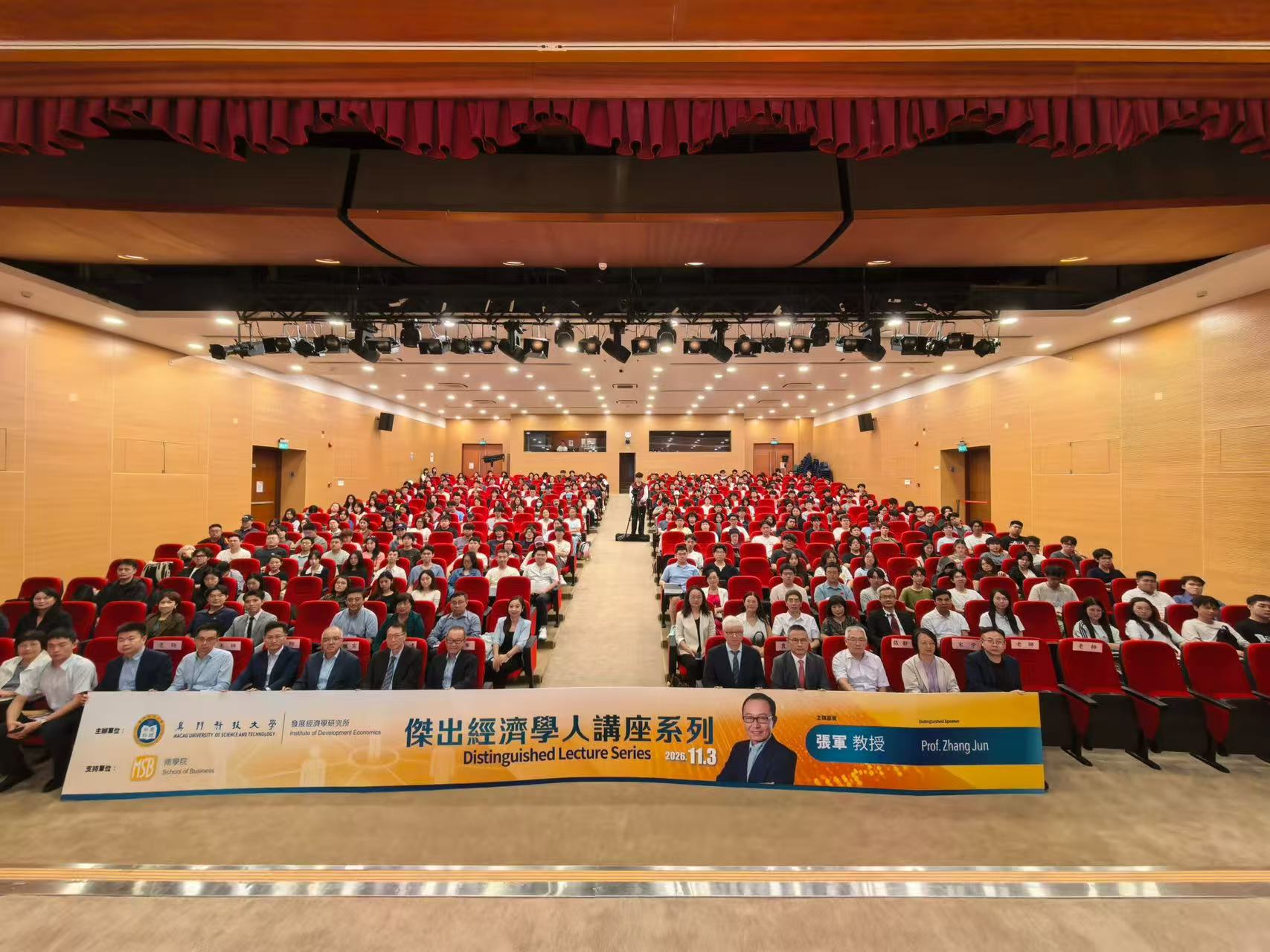
Leaders from MUST and distinguished guests attended the event, including Mr. Leory Yuen, Head of Wealth Management Department at the Macau Development Bank; Mr. Wang Yao, Vice Director-General of the Macao Innovation Development Research Association; Professor Pang Chuan, Vice President of MUST; Distinguished Guest Chair Professor Francis T. Lui, Director of the Institute for Development Economics of MUST; and Professor Song Yu, Assistant Director of the Institute for Development Economics of MUST; Professor Song Yu, Zhang Jinghua, Assistant Dean of the School of Business of MUST, were among the distinguished participants. In addition, experts in economics and students from MUST attended the lecture. The event attracted nearly 400 participants and was marked by a lively atmosphere.
During the lecture, Professor Zhang interpreted the underlying logic behind China’s economic and technological rise from the perspective of organizational scale.
Professor Zhang noted that while the existing theories of institutions, linear innovation, and demographic dividends can partially explain China’s economic growth, they do not fully account for the country’s technological leaps in areas such as high-speed rail, new energy, and artificial intelligence. Previous research has tended to focus on knowledge creation while overlooking the value generated through knowledge accumulation, dissemination, and large-scale application, all of which drive technological iteration and advancement. Drawing on network models and comparative case studies, Professor Zhang explained that organizational scale is not simply a matter of population size or geographic extent; rather, it lies in the integration of people, industries, markets, and knowledge. When a network reaches a critical scale, the accumulation of internal knowledge exceeds the loss of knowledge at its margins, enabling the continuous diffusion of knowledge. Comparing the drilling technologies of the Zigong salt industry with the development of the steam engine in England, he emphasized that, alongside original breakthroughs from “0 to 1,” the diffusion of knowledge and iterative improvements across multiple application scenarios from “1 to 100” are equally crucial for achieving technological transformation.
Professor Zhang further examined how China’s long-standing tradition of political unification has fostered strong organizational capabilities and highlighted the contemporary significance of scale in the digital and intelligent era. He argued that future technological competition will ultimately be a contest of knowledge organization capabilities. To sustain innovation-driven development, China should leverage the advantages of its vast domestic market, unlock the potential for knowledge recombination and re-creation, and incorporate the dimension of scale into the theoretical framework for understanding modernization.
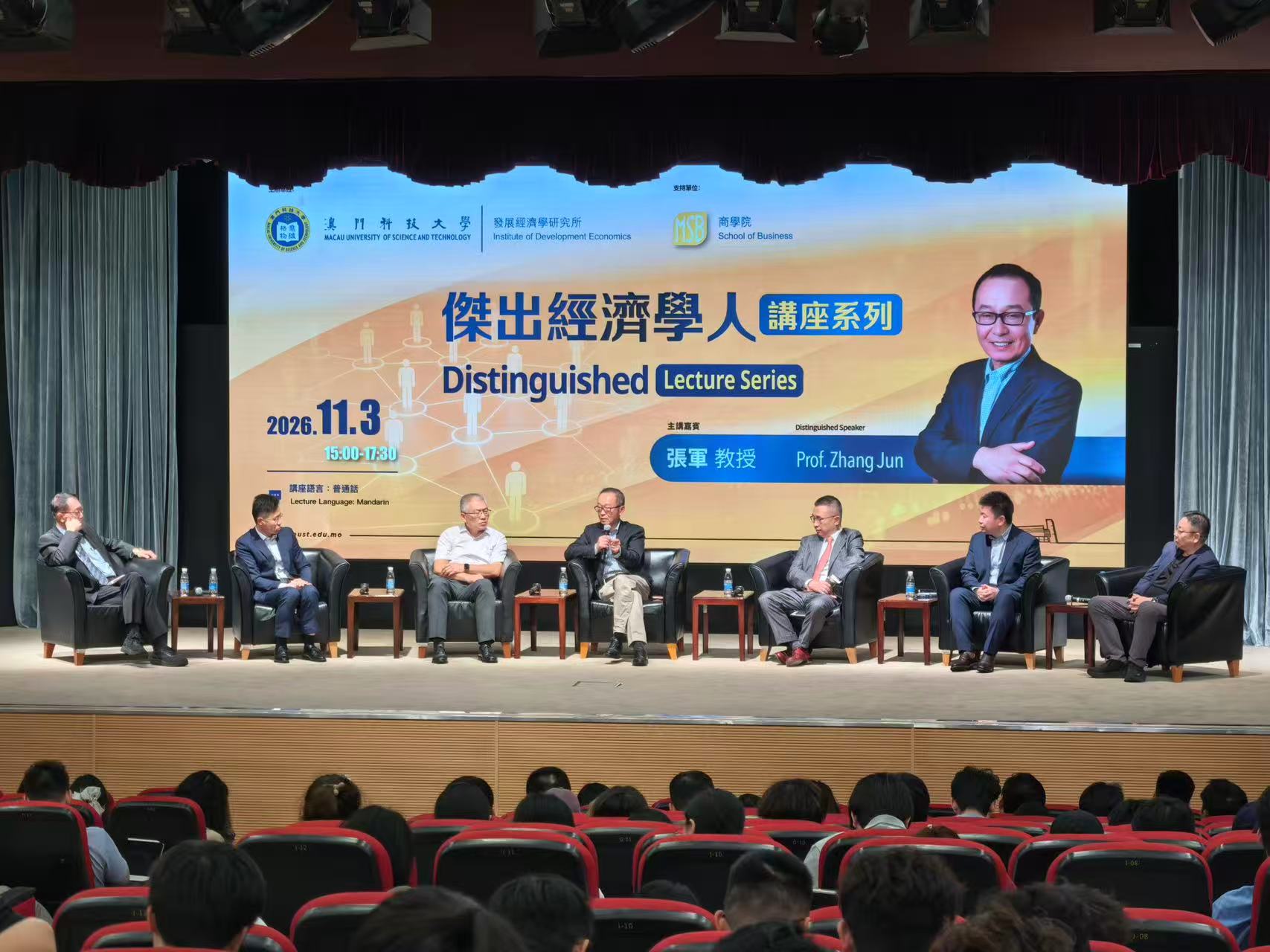
The panel discussion, moderated by Distinguished Guest Chair Professor Francis T. Lui, featuring distinguished panelists including Professor Zhang Jun, Mr. Leory Yuen, Mr. Wang Yao, Professor Song Yu, Associate Professor Zhao Shiyong and Assistant Professor Dong Yunhe. the guest speaker and participants engaged in in-depth discussions on topics including organizational scale, knowledge diffusion, and technological innovation.
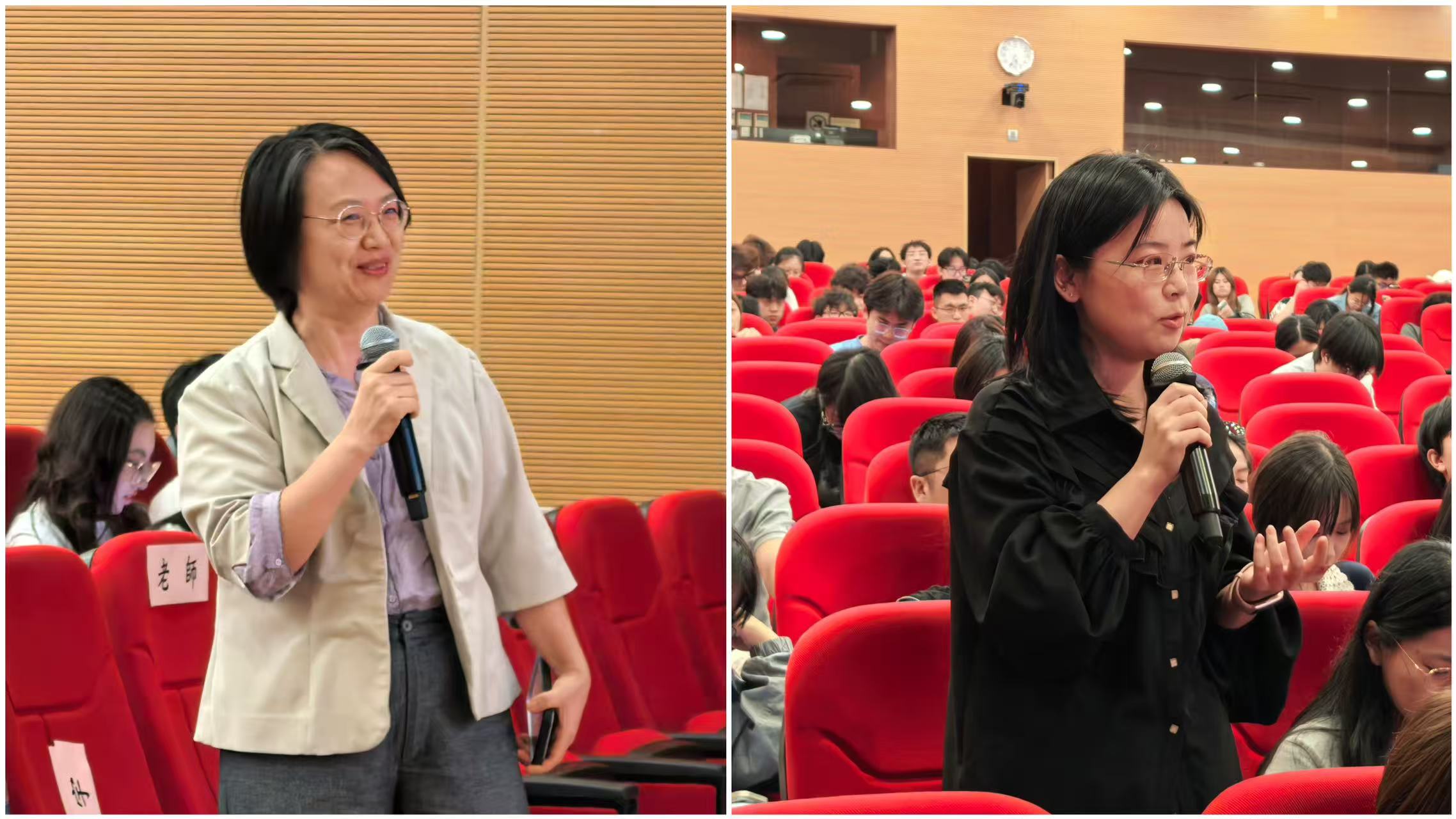
The audience participated enthusiastically in the Q&A session, exchanging ideas and perspectives with Professor Zhang. The lecture concluded on a high note amid lively interaction and warm applause from the audience.
Professor Zhang Jun is a distinguished economist and currently serves as Dean of the School of Economics at Fudan University and Director of the China Center for Economic Studies. He has devoted many years to the teaching and research of the contemporary Chinese economy and is widely recognized, both in China and internationally, as a leading scholar in the field of Chinese economic studies. His work has had a profound impact on academic research and policy discussions.
Professor Zhang has published extensively in leading scholarly journals, including Economic Research Journal, Social Sciences in China, American Economic Journal, Comparative Economic Studies, The World Economy, Singapore Economic Review, and China Economic Review. Over the past eight years, he has also authored a number of influential books, including Changing China (2019), Explaining China’s Economy to the World (2021), The Economy of a Great Nation: Navigating the Next Stage of Development (2022), Lectures on the Contemporary Chinese Economy (2024), and The Development Economics of a Unified State (2026).
Professor Zhang is among the first cohort of nationally designated Distinguished Professors in Philosophy and Social Sciences in China and serves as Convener of the Theoretical Economics Discipline Review Group under the Academic Degrees Committee of the State Council. His perspectives on China’s economic development are highly regarded by both the academic community and the media. He has twice been invited to participate in symposiums hosted by the Chinese Premier and is frequently invited to deliver keynote speeches at major domestic and international forums and summits.
Since 2005, Professor Zhang has served as a columnist for Project Syndicate, a renowned international platform for thought leaders, where he regularly publishes commentaries on the Chinese economy that have attracted considerable attention from global academic and policy circles. His scholarly contributions have received numerous accolades, including the Seventh China Economics Theory Innovation Award (2015) and the Bergson Prize for Best Paper awarded by the Association for Comparative Economic Studies (2018).
A group photo during the lecture
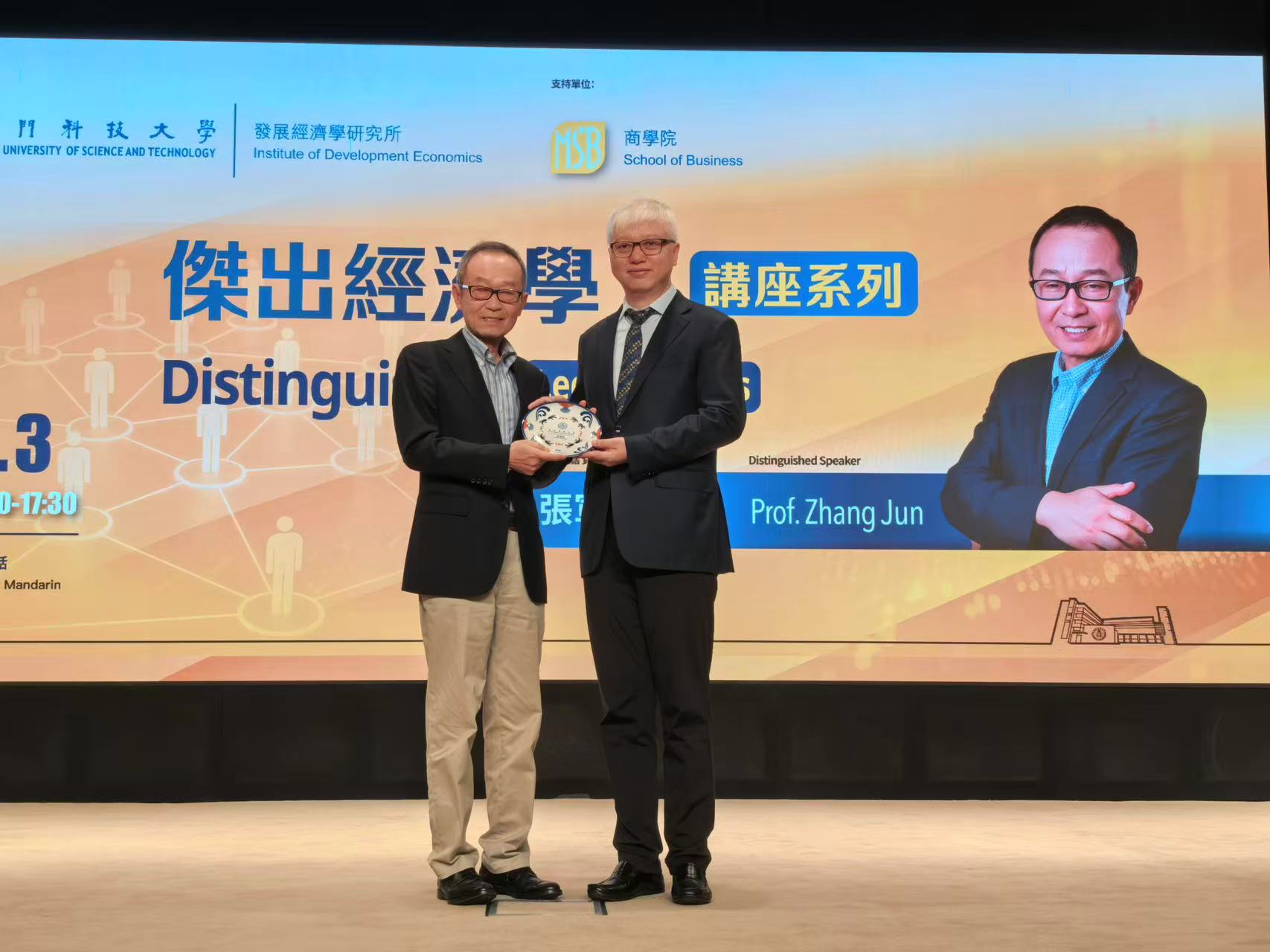
Professor Pang Chuan, Vice President of MUST (Right) presented a souvenir to Professor Zhang Jun (Left)
During the roundtable discussion
Q&A Session